Pre-Institute Readings
- “OHA Principles and Best Practices,” Adopted October 2018, Oral History Association.
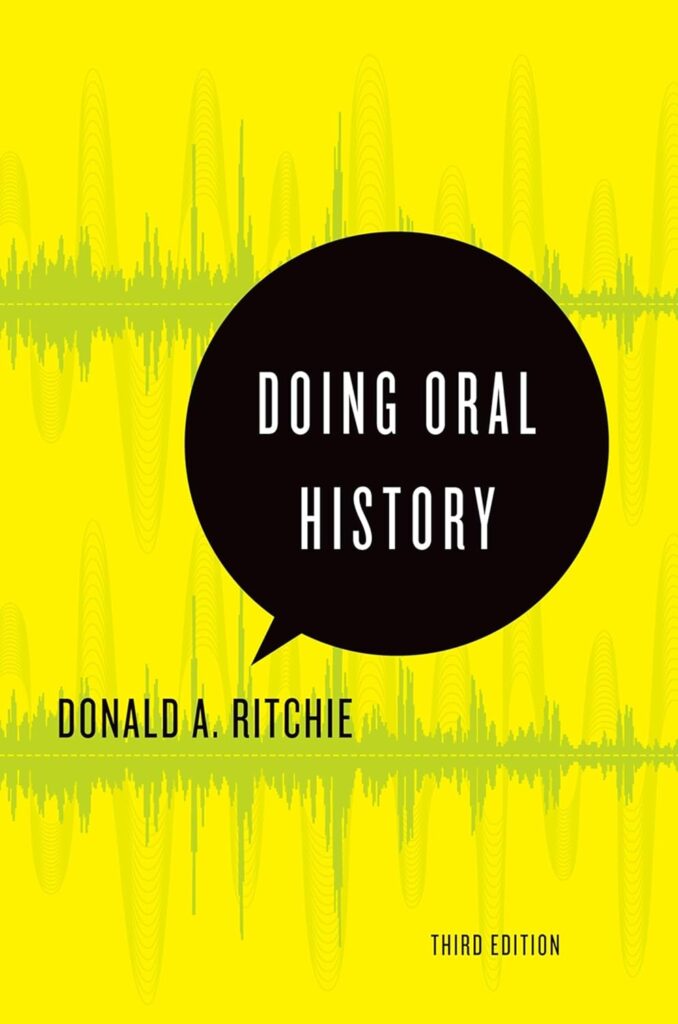
- Ritchie, Donald A. Doing Oral History 3rd edition. New York: Oxford University Press, 2015. The introduction and chapters 1, 2, 3, and 7 will be available online
- Selectionsall required will be made available on the online in advance of the institute.
- “Oral History Training Tools,” developed by Dr. Jason A. Higgins and Dr. Emily Hamilton. These are open-access training modules, which you may use in your own classes.
Week 1 Readings
Monday, June 19
- Institute will review and discuss key highlights from the Oral History Association’s Principles and Best Practices,” Adopted October 2018, Oral History Association. https://www.oralhistory.org/principles-and-best-practices-revised-2018/
- Group discussions and activity on the readings: Ortiz, Paul, “Tearing Up the Master’s Narrative: Stetson Kennedy and Oral History,” The Oral History Review (2014) 41:2, 279-289, DOI: 10.1093/ohr/ohu027
- Activity: create a list of do’s and don’ts based on the article to share with students in an accessible and updated way for Gen Z/Alpha.
- Guided discussion of Portelli, Alessandro. “What Makes Oral History Different,” The Oral History Reader, 3rd ed. (New York: Routledge, 2015), 48-58.
- Activity: We will also view and discuss oral history clips that illustrate the challenges with historical memory, collective memory, and Portelli’s ideas about how oral history tells us more about meaning than events. This will be a great opportunity to talk about critically analyzing sources.
- Introduction and Chapter 1 of Ritchie, Donald A. from Doing Oral History 3rd ed. New York: Oxford University Press, 2015.
Tuesday, June 20
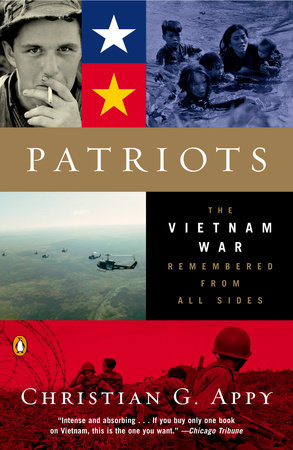
Guided discussions and group activities on Christian G. Appy, Patriots: The Vietnam War Remembered from All Sides (New York: Penguin, 2004).
- Vu Thi Vinh, “The Truong Son Jungle Gave Us Life” and Nguyen Thi Kim Chuy, “We came home hairless with ghostly white eyes” (103-106).
- “Sylvia Lutz Holland, “We saved their lives, but what life?” (170-75) and Nancy Smoyer oral history (“I can’t believe the Donut Dollies got us to do that.” (188-90).
- “My Lai” and the oral histories of Larry Colburn and Michael Bernhardt (343-53).
- “From Cambodia to Kent State” and “Tom Grace” (377-89)
- Ritchie, Donald. Chapter 2, “Setting Up an Oral History Project.” In Doing Oral History, (35-72).
- Schneider, William. Chapter 1, “Oral History in the Age of Digital Possibilities.” In Oral History and Digital Humanities, 19-34.
Furter Reading Recommendations
- Steve Estes, Ask & Tell: Gay & Lesbian Veterans Speak Out (Chapel Hill: UNC Press, 2007).
- Hagopian, Patrick. “Voices from Vietnam: Veterans’ Oral Histories in the Classroom,” The Journal of American History 87, no. 2 (2000): 593–601. https://doi.org/10.2307/2568766.
- Heather M. Stur, The U.S. Military and Civil Rights Since World War II (ABC-CLIO, September 2019).
- Douglas Boyd, Chapter 4, “‘I Just Want to Click on it and Listen’: Oral History Archives, Orality, and Usability,” in Boyd, Douglas, and Larson, Mary, eds. Oral History and the Digital Age. New York: Palgrave, 2014, 77-96.
Wednesday, June 21
- McHugh, S.A.. “The Aerobic Art of Interviewing,” Asia Pacific Media Educator, 18, 2007, 147-154. https://ro.uow.edu.au/cgi/viewcontent.cgi?article=1012&context=apme
- Ritchie, Donald. Chapter 3, “Conducting Interviews” Doing Oral History (73-102).
- Morrissey, Charles. “The Two-Sentence Format in Oral History Interviewing Technique,” Oral History Review 15:1, 43-54. https://doi.org/10.1093/ohr/15.1.43
- Crane, Stephen. “A Mystery of Heroism”
- Jarrell, Randall. “The Death of the Ball Turret Gunner”
- Tim O’Brien, The Things They Carried (Be sure to have at least read the chapter entitled “Speaking of Courage” prior to this session; however the whole text will be open for discussion and could be a resource application in your classrooms)
- Caputo, Philip. A Rumor of War (Read the Preface)
Further Reading Recommentations
- Neuenschwander, John A. “The Legal Ramifications of Oral History,” in The Oxford Handbook of Oral History. Edited by Donald Ritchie. New York: Oxford University Press, 2011.
- Strong, Liz H. (2021) “Shifting Focus: Interviewers Share Advice on Protecting Themselves from Harm,” The Oral History Review, 48:2, 196-215, DOI:10.1080/00940798.2021.1947144
- Yow, Valerie. “Interviewing Techniques and Strategies,” In the Oral History Reader, 3rd Edition, edited by Robert Perks and Alistair Thomson, (153-178).
- Crane, Stephen. “A Mystery of Heroism”
- Jarrell, Randall. “The Death of the Ball Turret Gunner”
- Tim O’Brien, The Things They Carried (Be sure to have at least read the chapter entitled “Speaking of Courage” prior to this session; however the whole text will be open for discussion and could be a resource application in your classrooms)
- Caputo, Philip. A Rumor of War (Read the Preface)
- “The Sniper” by Liam O’Flaherty
Thursday, June 22
- Dickey, James. “Hunting Civil War Relics at Nimblewill Creek”
- Komunyakaa, Yusef . “Facing It”
- Rancourt, Suzanne S. “Why I Don’t Meditate”
- Turner, Brian. Here, Bullet (Activities: Participants will identify selections that they think will work well in their classrooms. We will also discuss in groups the following selections: “In the Leupold Scope” and “Here, Bullet.”
- Owen, Wilfred. “Disabled,”
- Chapter 2, from Ron Kovic, Born on the Fourth of July.
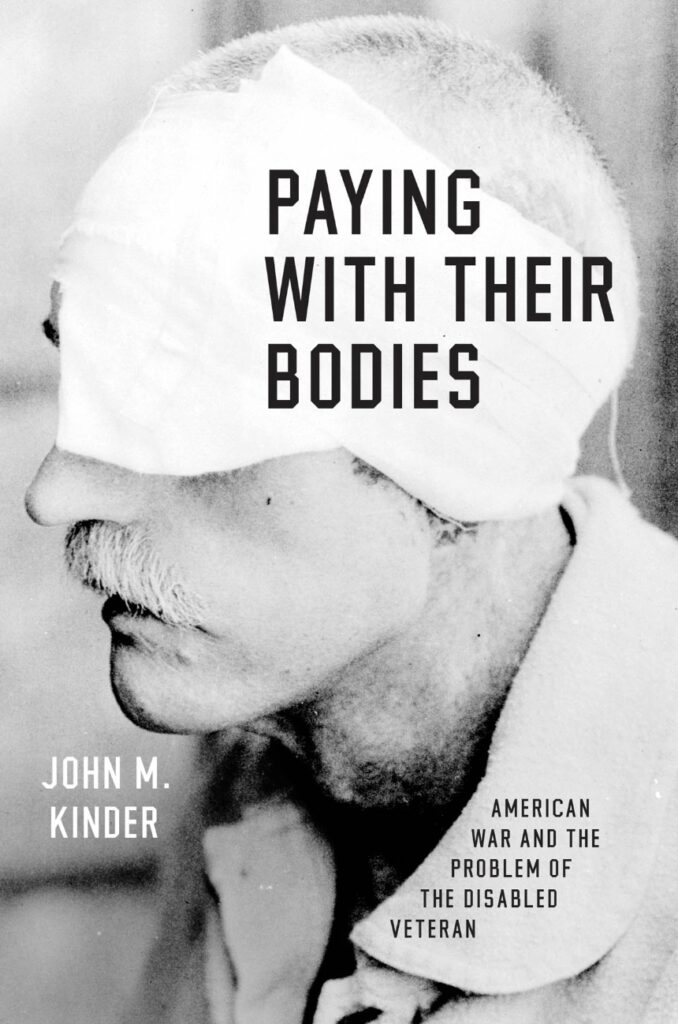
- John M. Kinder, “Introduction” Paying With Their Bodies: American War and the Problem of the Disabled Veteran (Chicago: University of Chicago Press, 2015)
- Recommended: John M. Kinder, Chapter 8: “The Shiny Plating of Prestige: Disabled Veterans in the American Century,” from Paying With Their Bodies: American War and the Problem of the Disabled Veteran (Chicago: University of Chicago Press, 2015).
Friday, June 23
- Rodney-Haapala, Karin. “Incidents-Place, Journal Entry” and “Place, Photograph” in National Veterans Art Museum.
- Khadijah Queen, “35 x 36”
- Eastman, Marjorie K. Chart your own path. The Frontline Generation: How we served Post 9/11 (pp. 19-24). New York: Longbow Six, 2016. https://archive.org/details/frontlinegenerat0000east
- “PBS Newshour: Black Veterans Sue VA over Decades of Discrimination”
- Alistair Thomson, “Anzac Memories Revisited: Trauma, Memory and Oral History,” The Oral History Review, (2015) 42:1, 1-29, DOI: 10.1093/ohr/ohv010\
- Oral History Association, “Core Principles of the OHA,” https://www.oralhistory.org/oha-core-principles/, and “OHA Statement on Ethics,” https://www.oralhistory.org/oha-statement-on-ethics/.
Further Reading Recommendations
- Explore recent news stories on the Black Veterans Project: https://www.blackveteransproject.org/news
- Anderson, Laurie Halse. Impossible Knife of Memory (A good text for teachers who are interested in a YA Literature text to use in their classrooms that addresses trauma and veterans).
- Browning, Christopher R. “Remembering Survival: Inside a Nazi Slave Labor Camp,” from Oral History Reader, Third Edition, (311-19).
- Caruth, Cathy, ed. “Interview with Robert J. Lifton,” in Listening to Trauma: Conversations with Leaders in the Theory and Treatment of Catastrophic Experience. Baltimore: Johns Hopkins Press, 2014.
- Cramer, Jennifer A. “First, Do No Harm”: Tread Carefully Where Oral History, Trauma, and Current Crises Intersect, The Oral History Review, 47 no. 2 (2020): 203-213, DOI:10.1080/00940798.2020.1793679
- Shay, Jonathan. Odysseus in America: Combat Trauma and the Trials of Homecoming, New York: Scribner, 2002.
Week 2
Monday, June 26
- Vuic, Kara Dixon. “Our First Sister: Lynda Van Devanter and the Vietnam Veterans of America’s Women’s Project,” in Service Denied: Marginalized Veterans in Modern American History. Edited by John M. Kinder and Jason A. Higgins (Amherst, MA: University of Massachusetts Press, 2022).
- Vuic, Kara Dixon. “Not All Women Wore Love Beads in the Sixties,” from Officer, Nurse, Woman: The Army Nurse Corps in the Vietnam War (The Johns Hopkins University Press, 2010).
- Explore selected interviews from the Military Women’s Memorial Oral History Collections: https://womensmemorial.starter1ua.preservica.com/
- Bogan, Louise. “To My Brother Killed: Haumont Wood: October, 1918.” Listen at Bogan, Louise. “To My Brother Killed: Haumont Wood: October, 1918.”
- Du Bois, W.E.B. “Returning Soldiers,” The Crisis (1919)
- “The Colored Soldiers,” Paul Lawrence Dunbar
- Jones, Brock. “Memorial from a Park Bench” from Cenotaph, Fayetteville, AR: University of Arkansas Press, 2016.
- Sandburg, Carl. “Grass.”
Further Reading Recommendations
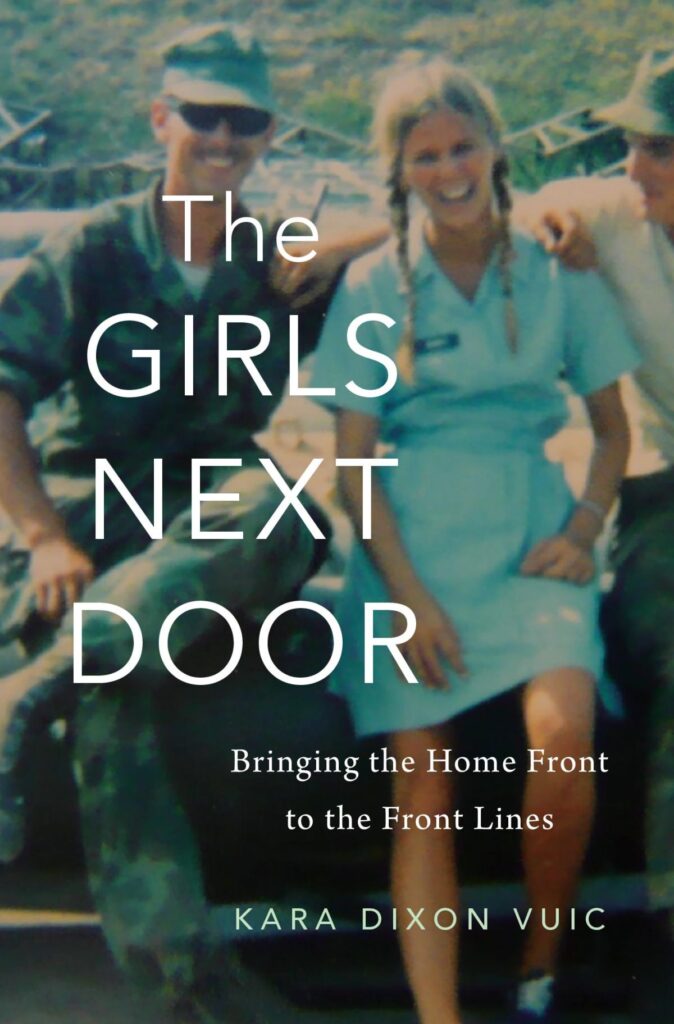
- Vuic, Kara Dixon. The Girls Next Door: Bringing the Home Front to the Front Lines. Cambridge, MA: Harvard University Press.
- Vuic, Kara Dixon, ed. The Routledge History of Gender, War, and the U.S. Military. New York: Routledge, 2018.
- Bierce, Ambrose. “An occurrence at Owl Creek Bridge”
- Blight, David. Race and Reunion: The Civil War in American Memory. Cambridge, MA: Harvard University Press, 2001.
- Douglass, Frederick. “Men of Color, To Arms!” (1863)
- Williams, Chad. Torchbearers of Democracy: African American Soldiers in the World War I Era. Chapel Hill, NC: UNC Press, 2010.
- MacLeish, Archibald. “The Silent Slain.”
- Owen, Wilfred. “Dulce et Decorum Est.”
Tuesday, June 27
- “Participate in the Project,” Library of Congress, Veterans History Project, accessed Feb. 2, 2022. https://www.loc.gov/vets/kitmenu.html
- Ritchie, Donald. Doing Oral History, Chapter 6: “Preserving Oral History in Archives and Libraries” (161-191).
Further Reading Recommendations
- Sommer, Barbara W. Doing Veterans Oral History, A publication of the Oral History Association and the Library of Congress Veterans History Project. OHA Pamphlet Series, 2015.
Wednesday, June 28
- “At the Vietnam War Memorial” by Robert Dana
- “The Invasion of Grenada,” poem by W.D. Ehrhart
- Introduction from Hagopian, Patrick. The Vietnam War in American Memory: Veterans, Memorials, and the Politics of Healing. UMass Press, 2009.
- “Wa Ta Se Na Ka Mo Ni, Vietnam Memorial” by Ray A. Young Bear
- My Letter to the Wall: November 1989,” by Nguyễn Ngọc Xuân
- Revist: “Facing It,” by Yusef Komunyakaa
- Poems from WWII: John Ciardi, “A Box Comes Home”; Richard Eberhart, “The Fury of Aerial Bombardment”; Langston Hughes, “Beaumont to Detroit: 1943”; George Oppen, “Survival: Infantry”; Mary Jo Salter, “Welcome to Hiroshima”
- Terkel, Studs. The Good War: An Oral History of World War II. (any edition) New York: Pantheon, 1984. [“John Garcia,” pp. 17-22; “E. B. Sledge,” pp. 56-63; “Peggy Terry,” pp. 105-110; “Dempsey Travis,” pp. 149-156; “Joseph Small,” pp. 392-401; “Walter and Olga Nowak,” pp. 423-431; “Mikhail Nikolaevich & Galina Alexeyez,” pp. 459-456.]
Further Reading Recommendations
- Puller, Lewis B. Fortunate Son: The Healing of a Vietnam Vet. New York: Grove Press, 1991.
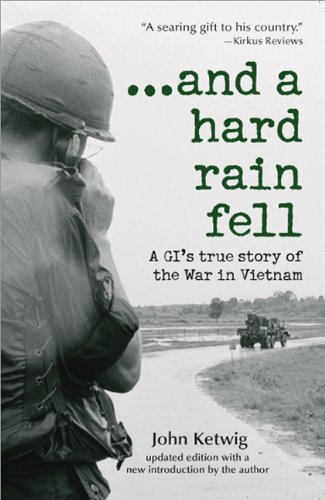
- John Ketwig, And a Hard Rain Fell: A G.I.’s True Story of the War in Vietnam. Naperville, IL: Sourcebooks, 1985; 2002; 2008.
- Phillips, Kimberley. War! What Is It Good For?: Black Freedom Struggles and the U.S. Military from WWII to Iraq. Chapel Hill, NC: UNC Press, 2012.
- Rosales, Steven. Soldados Razos at War: Chicano Politics, Identity, and Masculinity in the U.S. Military from World War II to Vietnam. University of Arizona Press, 2017.
- “World War II Poets: A Selection of Poets who Served in the Largest Conflict in Human History,” The Poetry Foundation, accessed January 4, 2022: https://www.poetryfoundation.org/collections/101637/world-war-ii-poets
Additional Teaching Resources
- Gitre, Edward J.K. et al. The American Soldier in World War II, Virginia Tech, 2021: https://americansoldierww2.org.